
Charger and vehicle requirements
Identify the charging equipment, vehicle, desired charging arrangement, and manufacturer information available for the equipment. This helps define what the proposed installation is intended to support.
Salinas Electrician Services is an independent information and enquiry website operated by Kurtis Online Holdings LLC. The site operator does not perform the advertised services, provide estimates, or arrange work. No service contractor is currently assigned to this website.

A useful EV charger installation starts with more than choosing a wall-mounted unit. The vehicle, charging equipment, desired charging rate, panel capacity, circuit route, and property layout all affect the electrical scope. Salinas Electrician Services provides a starting point for property owners seeking an estimate for Level 2 charging in Salinas and nearby Monterey County communities.
Level 2 charging can make routine home or workplace charging more convenient, but the circuit should be planned for the actual equipment and electrical system. Before work is defined, important details include the charger specifications, vehicle charging requirements, proposed parking location, available panel capacity, and distance from the panel to the charging point.
The goal of the initial assessment is to turn those details into a clear scope rather than assume that every property needs the same installation. Project scope, pricing, and timelines are confirmed in a written estimate and contract.
Two homes with the same electric vehicle can present very different installation conditions. A charger may be close to the electrical panel at one property and require a longer circuit route at another. Finished walls, outdoor locations, parking arrangements, existing electrical equipment, and panel conditions can also affect how a project is approached.
Panel capacity deserves particular attention because a new charging load becomes part of the property's electrical demand. Existing conditions should be assessed before conclusions are made about whether the present panel is suitable or whether additional work should be considered. Website descriptions alone cannot determine whether an existing installation complies with applicable requirements.
For workplaces and other commercial properties, planning may also involve charger placement, vehicle access, equipment locations, and coordination with the person responsible for the facility. Multiple charging points can change the project scope substantially, so the number of vehicles and intended charging pattern should be discussed early.
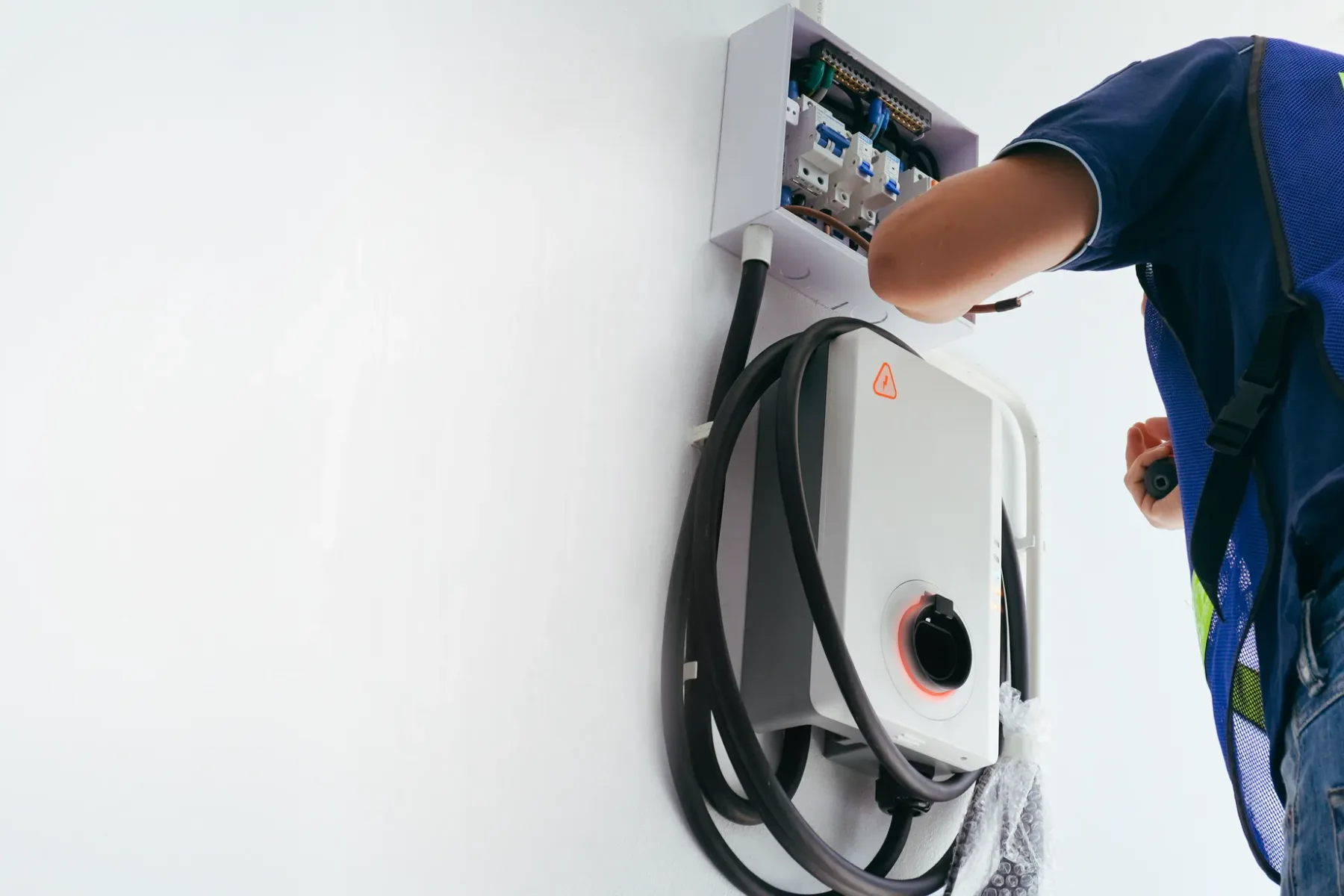
An estimate should connect the requested charging setup to observable site conditions. Having the charger model or manufacturer specifications available can make the initial discussion more useful.
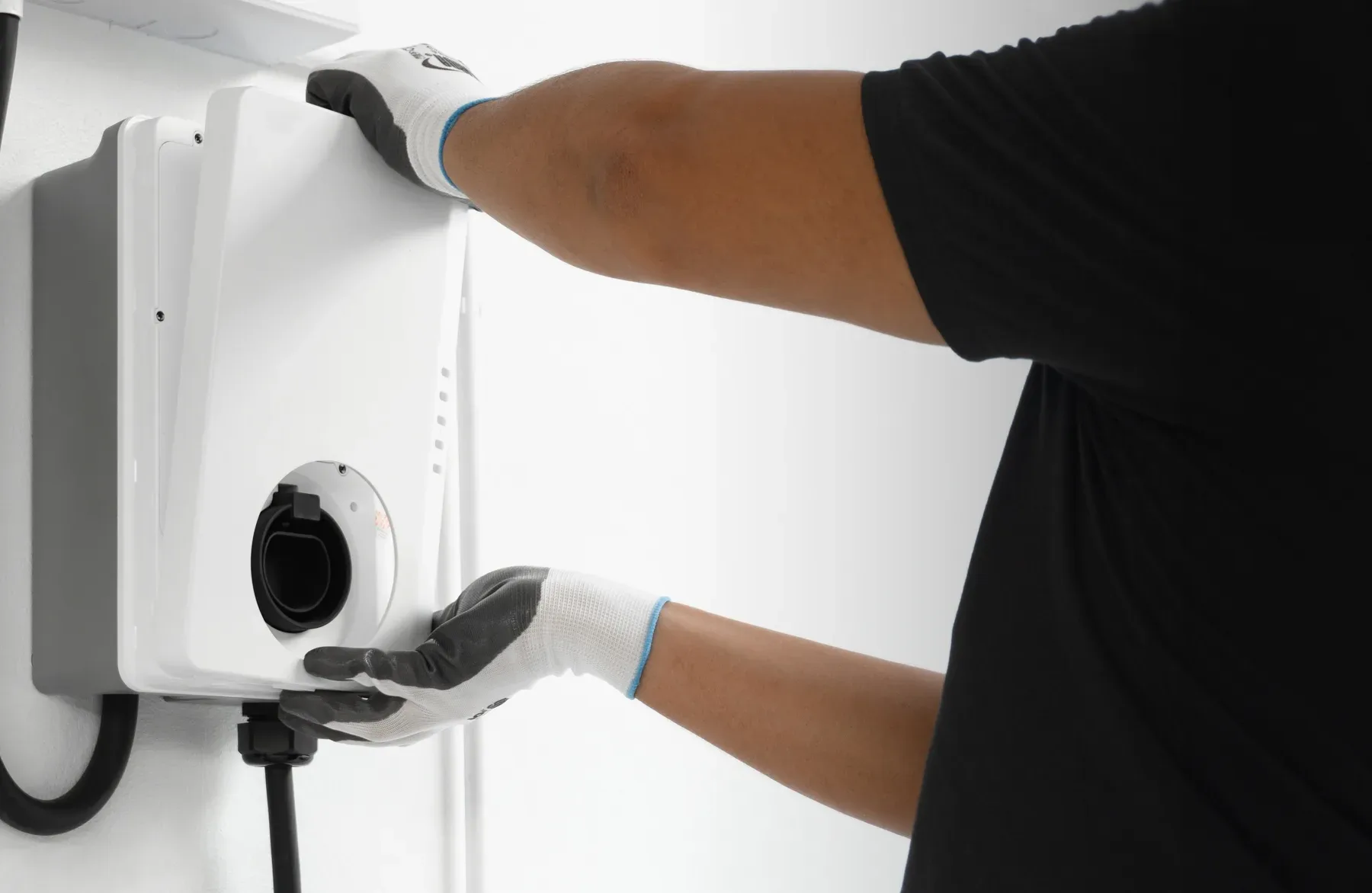
Identify the charging equipment, vehicle, desired charging arrangement, and manufacturer information available for the equipment. This helps define what the proposed installation is intended to support.
Review relevant panel conditions and the proposed charging load before defining the circuit scope. If panel-related work appears necessary, it can be evaluated separately rather than treated as an automatic part of every charger installation.
Consider where the vehicle normally parks, where the charging equipment will be mounted, and how the circuit could travel between the panel and charging location. Indoor and outdoor conditions may call for different installation considerations.
Permit and inspection requirements depend on the applicable authority and project. Required permits or inspections should be identified as part of project planning rather than assumed away.
A defined process helps property owners compare the requested work with the written scope and understand what remains subject to site conditions.
Share the property type, vehicle and charger information, proposed parking location, and whether the project is for a single residence, rental property, workplace, or another setting.
The project should account for the electrical panel, proposed circuit route, charger location, and other conditions that can affect the installation. Website information is general guidance and is not a substitute for an on-site assessment.
The estimate can identify the work being proposed and any assumptions or related work that needs separate consideration. Pricing and timing depend on that defined scope and site conditions.
If conditions discovered during the project change the agreed scope, those changes should be documented rather than treated as an informal assumption. Written project documentation helps keep responsibilities, additions, and costs clear.
This information site does not represent a licensed service contractor. Verify the identity, current license and applicable classification of any contractor independently before hiring or entering a contract.
Written project documents should clearly describe the agreed work. For EV charging, useful scope details may include the charging equipment, circuit work, installation location, routing assumptions, panel-related work if applicable, and responsibility for required project coordination. Ask how changes will be documented if site conditions require work outside the original scope.
Warranty and workmanship terms should also be read in the actual project documents rather than assumed from general website language. If a product carries a manufacturer warranty, its terms are distinct from any contractor-specific workmanship commitment. Keep the estimate, contract, approved changes, equipment documentation, and applicable project records for future reference.
These answers provide general planning guidance for Salinas-area property owners. Final requirements depend on the equipment, property, electrical system, and applicable authorities.
No universal conclusion can be made from the charger alone. The proposed charging load and relevant electrical-system conditions need to be assessed before determining whether panel-related work should be included in the project.
Yes. Sharing the vehicle, intended charging location, and any charger models you are considering can support an initial discussion. Exact equipment specifications may still be needed before the final installation scope is established.
Applicable permit and inspection requirements depend on the project and authority with jurisdiction. They should be confirmed for the specific installation and included in project planning where required.
Provide the property type, vehicle, charger model if selected, proposed charging location, location of the electrical panel if known, and a short description of your charging needs. Avoid sending payment information, financial account details, or gate, door, or alarm codes through a public form.
Salinas Electrician Services is an independent information and enquiry website operated by Kurtis Online Holdings LLC. The site operator does not perform the advertised services, provide estimates, or arrange work. No service contractor is currently assigned to this website. Your enquiry is received by Kurtis Online Holdings LLC, not by a service contractor. It is not a booking or estimate request.